



In this guide
How to use the case scenario
Back to top
There are various ways you may use the case stories, from individual self-directed learning to support continuous professional development to using them in a team environment. The idea is that by learning from the experience of others, maternity unit staff will be able to change their approach to care.
The following case study is an example scenario based on people’s real experiences for the purpose of learning. All names are fictional. We thank NHS Resolution for the use of use their case story about recognising and avoiding significant maternal and neonatal hyponatraemia.
Consider the following:
- Could this happen where I work?
- What changes within my organisation or team might I consider after reading the material, including individual practice?
- What information should I share with the team?
- How can I share the learning from this case story?
- Who else needs to know?
Practical applications
- Consider the key elements of the case story and through reflection apply the learning to influence your practice in the future.
- Use this case study as a point of discussion at appropriate multi-disciplinary team meetings, safety huddles, and/or human factor’s training.
- Use this case study to create a multi-disciplinary simulation in the clinical area or on mandatory training.
Topic: recognising and avoiding significant maternal and neonatal hyponatraemia.
Back to top
Key points:
- All women in labour are at increased risk of hyponatraemia (defined as blood serum sodium < 130 mmol/l), especially dilutional hyponatraemia which is sometimes referred to as water intoxication.
- This is a result of lower baseline serum sodium in pregnancy, impaired ability to excrete water in the third trimester and exposure to the anti-diuretic effect of oxytocin (synthetic and/or endogenous). Excessive oral or intravenous fluid intake exacerbates this, with potentially serious complications for mother and baby.
- Complications of hyponatraemia include headache, agitation, confusion, seizures and death. Vigilance, diagnosis and active management is therefore imperative.
- Water freely crosses the placenta, lowering the infant’s blood sodium concentration in tandem with its mothers. Seizures secondary to hyponatraemia in the newborn infant are like those caused by hypoxic ischaemic encephalopathy (HIE) and they are likely to receive therapeutic cooling as a result.
- In a study, 26% of low-risk mothers who received or ingested more than 2500 millilitres of fluid during labour were hyponatraemic1.
- Significant hyponatraemia can be avoided by giving women evidence-based advice on oral fluid intake, careful monitoring of fluid input and output and responding to positive fluid balance.
Ms K, who is in her first pregnancy, attended the midwifery-led unit in spontaneous labour at term. The midwife assessing her observes that she has a mild tachycardia on admission and encourages her to drink. The tachycardia settles, however, after several hours in labour she is transferred to the labour ward for management of slow progress in the first stage of labour.
On the labour ward discussions take place regarding the need to have an intravenous (IV) oxytocin infusion to augment contractions. An IV cannula is inserted, and the oxytocin infusion and intravenous fluids were started. Some variable decelerations of the fetal heart are noted on the cardiotocograph (CTG), and the flow of intravenous fluids is increased.
Ms K progresses to fully dilatation, and after active pushing for around an hour, the CTG is pathological and she consents to a trial of instrumental birth.
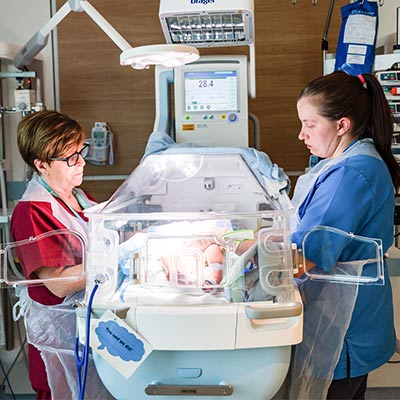
In theatre, her behaviour is noted to be unusual, as she appears confused and agitated, but she is tired and exhausted after a prolonged labour. The baby is delivered by forceps in poor condition, the neonatal team begin resuscitation and transfer the baby to the neonatal intensive care unit for ongoing care including therapeutic cooling for seizures.
In maternity recovery, the mother’s behaviour continued to deteriorate and a referral to the liaison psychiatry team is made. Approximately an hour after giving birth, her partner calls for help as she begins to have a seizure.
An arterial blood gas taken following the seizure reveals a sodium level of 117 mmol/l that is confirmed on a venous sample sent to the laboratory. She is transferred to the intensive care unit for ongoing care.
Her partner is not sure but thinks she may have drunk at least three litres of water while in labour. This is in addition to the two litres of intravenous fluid on the drug chart from labour ward and theatre.
The neonatal team are also informed, and a review of the baby’s cord gas results reveal a low sodium at birth of 116 mmol/l, but this was not seen previously.
Learning Points
Back to top
- This case story highlights the importance of accurately monitoring fluid intake and output during labour to reduce the chance of a mother experiencing hyponatraemia.
- Hyponatremia should be considered as a potential differential diagnosis if a mother appears confused, agitated or has a significant behaviour change during labour and a sodium level should be checked immediately.
- Updated National Institute for Health and Care Excellence Guidance (NICE) guidance advises not to offer intravenous fluids to treat fetal heat rate abnormalities unless the woman is hypotensive or has signs of sepsis.
- Hyponatraemia should be considered as a potential cause for neonatal seizures, particularly if there is no strong evidence of hypoxia during labour or delivery.
Considerations for you
- Do all birth settings in your trust have up-to-date guidance on fluid intake, monitoring, and fluid balance management in labour?
- Does local guidance cover what is appropriate advice to give to women regarding oral fluid intake? Current evidence suggests a rise in cases of hyponatraemia in labour due to excessive oral intake of hypo or isotonic fluids in addition to the recognised effects of intravenous fluids and oxytocin infusion.
- Do partograms used in all birth settings have a section to record fluid input and output?
- Read the Northern Ireland GAIN guideline on hyponatraemia in labour3 and consider whether it could be implemented in your trust.
The Code
In the Code there are four pillars; prioritise people, practise effectively, preserve safety and promote professionalism and trust).
Prioritise people - You put the interests of people using or needing nursing or midwifery services first. You make their care and safety your main concern and make sure that their dignity is preserved and their needs are recognised, assessed and responded to. You make sure that those receiving care are treated with respect, that their rights are upheld and that any discriminatory attitudes and behaviours towards those receiving care are challenged.
Practise effectively - You assess need and deliver or advise on treatment, or give help (including preventative or rehabilitative care) without too much delay, to the best of your abilities, on the basis of best available evidence. You communicate effectively, keeping clear and accurate records and sharing skills, knowledge and experience where appropriate. You reflect and act on any feedback you receive to improve your practice.
Preserve safety - You make sure that patient and public safety is not affected. You work within the limits of your competence, exercising your professional ‘duty of candour’and raising concerns immediately whenever you come across situations that put patients or public safety at risk. You take necessary action to deal with any concerns where appropriate.
Promote professionalism and trust - You uphold the reputation of your profession at all times. You should display a personal commitment to the standards of practice and behaviour set out in the Code. You should be a model of integrity and leadership for others to aspire to. This should lead to trust and confidence in the professions from patients, people receiving care, other health and care professionals and the public.
Which standards within the four pillars are most relevant to this case scenario?
Standards of proficiency for midwives
In the Standards of proficiency for midwives there are six domains:
- Being an accountable, autonomous, professional midwife
- Safe and effective midwifery care: promoting and providing continuity of care and carer
- The midwife’s role in public health, health promotion and health protection
- The midwife’s role in assessment, screening and care planning
- The midwife’s role in optimising normal physiological processes and working to promote positive outcomes and prevent complications
- The midwife’s role in first line assessment and management of complications and additional care needs
- The midwife’s role in caring for and supporting women and newborn infants requiring medical, obstetric, neonatal, mental health, social care, and other services
- Working with others: the midwife as colleague
- Developing knowledge, positive role modelling and leadership: the midwife as scholar and leader
- The standards say that midwives are fully accountable as the lead professional for the care and support of women and newborn infants, and partners and families. They provide care based on the best available evidence and keep up to date with current knowledge and skills, thereby helping to ensure that their care is responsive to emerging evidence and future developments. They work in partnership with women, enabling their views, preferences, and decisions, and helping to strengthen their capabilities. Midwives work in partnership with women to promote positive outcomes and to anticipate and prevent complications. Midwives make a vital contribution to the quality and safety of maternity care, combining clinical knowledge, understanding, and skills with interpersonal and cultural competence.
Which domain(s) had most relevance for this case scenario about additional care needs, complication and multidisciplinary working?
Standards for pre-registration midwifery programmes
Approved education institutions, together with practice learning partners, must provide practice learning opportunities that enable students to develop and meet the NMC Standards of proficiency for midwives. This includes:
3.3 provide students with learning opportunities to enable them to achieve the proficiencies related to interdisciplinary and multiagency team working
3.4 provide students with learning opportunities to enable them to achieve the proficiencies related to continuity of midwifery carer across the whole continuum of care for all women and newborn infants
3.5 provide learning opportunities, across the whole continuum of care
3.5.5 develop the required knowledge, skills and behaviours needed to support and care for no less than 40 women who have additional care needs or develop complications including those related to physical, psychological, social, cultural and spiritual factors.
Reflect on your learning from this case scenario. What will you take back to practice?
- Consider as part of your reflection - are there other standards not given above?
Bibliography
IHRD (2018). Report of the Inquiry into Hyponatraemia Related Deaths; Chairman Sir John O’Hara. Website: www.ihrdni.org. Report: https://www.ihrdni.org/inquiry-report.htm. (Accessed 21/01/2026).
Moen V, Brudin L, Rundgren M, Irestedt L. Hyponatraemia complicating labour-rare or unrecognised? A prospective observational study. BJOG. 2009 116:552-56. https://pubmed.ncbi.nlm.nih.gov/19175600/ (accessed 21/01/2026)
National Institute for Health and Care Excellence Guidance (2025), NG229 Fetal monitoring in labour https://www.nice.org.uk/guidance/ng229/chapter/Recommendations. Published December 2022; updated Nov 2025. (Accessed 21/01/2026)
National Institute for Health and Care Excellence (2025). NG235 - Intrapartum care [P] Supporting document for the recommendations on fluid balance and peripartum hyponatraemia. https://www.nice.org.uk/guidance/ng235/evidence/p-supporting-document-for-the-recommendations-on-fluid-balance-and-peripartum-hyponatraemia-pdf-474720226460. June 2025. (Accessed 21/01/26)
NHS Resolution (2023). Recognising and avoiding significant maternal and neonatal hyponatraemia https://resolution.nhs.uk/resources/recognising-and-avoiding-significant-maternal-and-neonatal-hypoatraemia/ (Accessed 21/01/2026).


