



Anti-racism case study: Samuel: resident-to-staff racism in adult social care
Last Updated 29/10/2026
Samuel: resident-to-staff racism in adult social care
Setting: Adult social care: care home setting.
Context
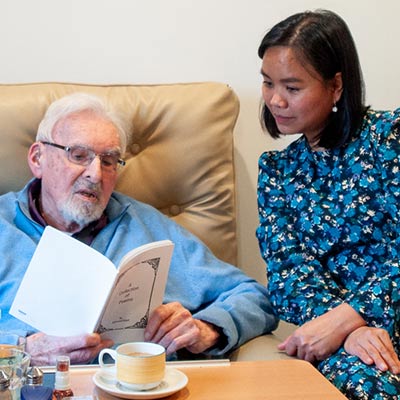
Samuel is a 42-year-old Black British senior care assistant of Afro-Caribbean heritage. He has worked in adult social care for more than ten years and is respected by residents, families and colleagues for his compassionate and professional approach. Margaret is an 84-year-old White British resident living with early-stage vascular dementia, diabetes and reduced mobility. She requires support with medication, personal care, nutrition and emotional wellbeing.
What happened
Samuel is one of the regular carers assigned to Margaret’s care plan. When he first begins supporting her, Margaret appears polite but distant. Over time, her behaviour becomes increasingly discriminatory. She refuses personal care from Samuel, says she wants “an English carer instead” and repeatedly refers to Samuel as “boy” rather than by his name. Some colleagues overhear these remarks but initially dismiss them as “just her generation” or related to dementia. Samuel attempts to remain professional and continues delivering care respectfully.
Over several weeks, the behaviour escalates. Margaret begins refusing meals and medication when Samuel is on shift. She shouts racial slurs during personal care and makes complaints to management demanding that Samuel be removed from her care. Samuel becomes distressed and emotionally exhausted. To protect his wellbeing, he starts avoiding unnecessary interaction with Margaret. Other staff begin informally swapping duties to avoid conflict, leading to inconsistency in Margaret’s care routine.
Management initially responds by rotating staff assignments and advising Samuel not to “take it personally”, while also explaining the behaviour as part of Margaret’s dementia. No formal risk assessment is completed, no anti-discrimination procedure is initiated and no structured support is offered to Samuel. The wider impact on care quality is not addressed.
Impact
Samuel feels unsupported and isolated. Care arrangements become inconsistent. Margaret misses medication doses due to refusal and confusion about carers, blood sugar monitoring becomes irregular and communication between staff and Margaret deteriorates.
Margaret later falls while trying to mobilise independently and is admitted to hospital with a fractured hip. Hospital staff identify dehydration, poor diabetic control and missed medication doses as contributing to her deterioration.
Samuel takes sick leave due to work-related stress. Team morale declines and staff begin to feel discriminatory behaviour is tolerated within the home.
What anti-racist practice should look like
Cognitive impairment may influence behaviour, but it does not remove the organisation’s responsibility to recognise racism, assess risk and protect staff dignity. A compassionate and structured response should balance person-centred care with staff safety, continuity of care and anti-discriminatory practice.
Key learning points
- Racism towards staff should never be normalised, minimised or dismissed
- Staff have the right to work in a culturally safe and respectful environment
- Dementia-informed care and anti-racist practice must work together
- Discriminatory behaviour can disrupt continuity of care and affect safety, communication and treatment adherence
- Managers should complete risk assessments, document concerns, review care plans and offer staff support
- Organisational inaction can harm both staff wellbeing and resident outcomes
- Clear policies should include guidance on patient, resident and family racism towards staff
- Early intervention protects dignity, safety, morale and quality of care.
-
 Print
-
 Download
-
 Email Page
- Last Updated: 29/10/2026
Related guides
Standards (new)
-
The Standards of Proficiency
-
Standards of proficiency for nurses
- Standards of proficiency for nurses - overview
- Introduction
- How the Standards of Proficiency for Nursing are structured
- Platform 1: Being an accountable professional
- Platform 2: Promoting health and preventing ill health
- Platform 3: Assessing needs and planning care
- Platform 4: Providing and evaluating care
- Platform 5: Leading and managing nursing care and working in teams
- Platform 6: Improving safety and quality of care
- Platform 7: Coordinating care
- Annexe A: Communication and relationship management skills
- Annexe B: Nursing procedures
- Glossary for proficiency in Nursing
-
Standards of proficiency for nursing associates
- Standards of proficiency for nursing associates - overview
- About our Standards
- Platform 1: Being an accountable professional
- Platform 2: Promoting health and preventing ill health
- Platform 3: Provide and monitor care
- Platform 4: Working in teams
- Platform 5: Improving safety and quality of care
- Platform 6: Contributing to integrated care
- Annexe A: Communication and relationship management skills
- Annexe B: Procedures to be undertaken by the nursing associate
- Glossary
-
Standards of proficiency for midwives
- Standards of proficiency for midwives - overview
- Introduction to the Standards of Proficiency for Midwives
- About this Standard
- How to read these standards of proficiency
- Domain 1: Being an accountable, autonomous, professional midwife
- Domain 2: Safe and effective midwifery care: promoting and providing continuity of care and carer
- Domain 3: Universal care for all women and newborn infants
- Domain 4: Additional care for women and newborn infants with complications
- Domain 5: Promoting excellence: the midwife as colleague, scholar and leader
- Domain 6: The midwife as skilled practitioner
-
Standards of proficiency for specialist community public health nurses (SCPHN)
- Standards of proficiency for specialist community public health nurses (SCPHN) - overview
- Introduction
- Sphere of influence A: Autonomous specialist community public health nursing practice
- Sphere of Influence B: Transforming specialist community public health nursing practice
- Sphere of influence C: Promoting human rights and addressing inequalities:
- Sphere of influence D: Population health
- Sphere of influence E: Advancing public health services
- Sphere of influence F: Leading and collaborating
- Glossary
-
Standards of proficiency for community nursing specialist practice qualifications (SPQ)
- Standards of proficiency for community nursing specialist practice qualifications (SPQ) - overview
- Introduction
- Platform 1: Being an accountable, autonomous professional and partner in care
- Platform 2: Promoting health and wellbeing and preventing ill health
- Platform 3: Assessing people’s abilities and needs, and planning care
- Platform 4: Providing and evaluating evidence-based care
- Platform 5: Leading, supporting and managing teams
- Platform 6: Leading improvements in safety and quality of care
- Platform 7: Care coordination and system leadership
- Glossary for community nursing specialist practice qualifications (SPQ)
-
Standards of proficiency for nurses
-
The Standards for Education and training
- Standards for post-registration programmes
-
Standards for prescribing programmes
- Standards for prescribing programmes - overview
- Introduction
- About our standards
- The Royal Pharmaceutical Society Competency Framework
- Titles, qualifications and formularies
- The student journey
- Selection, admission and progression
- Curriculum
- Practice learning
- Supervision and assessment
- Qualification to be awarded
- Glossary
- Standards framework for nursing and midwifery education
- Standards for student supervision and assessment
- Standards for pre-registration nursing associate programmes
-
Principles and Guidance
- Guidance on raising concerns for nurses, midwives and nursing associates
- Guidance on Whistleblowing to the NMC
- Guidance on the professional duty of candour
- Enabling Professionalism
- Principles for supporting women's choices in maternity care
- Principles of Advanced Practice
- Principles of Preceptorship
- Principles to support anti-racism in midwifery and nursing education and practice
- Guidance for nurse assessors
- Guidance on Indirect Supervision
- Supporting information for our education and training standards
- Guidance on using Social Media
-
Case studies
-
Practice learning experience case studies: for nursing programmes
- Practice learning experience case studies: for nursing programmes - overview
- Hospital setting - Adult: First year student nurse, Emma - case study
- Hospital setting - Adult: Second year student nurse, Saima
- Hospital setting - Adult: Third year student nurse, Darren
- Community Mental Health Team
- Community Adolescence Mental Health Services (CAMHS)
- Hospital: Learning Disability Liaison Service and Rheumatology Outpatients
- Haematology Ward
- Hyponatraemia nursing case scenario
- Community Children’s Nursing
- Community based Learning Disability Case study
- Acute care (children’s high dependency unit)
- Practice learning experience case studies: for midwifery programmes
-
Principles to support anti-racism in midwifery and nursing education and practice - anti racism case studies
- Principles to support anti-racism in midwifery and nursing education and practice - anti racism case studies - overview
- anti-racism case study: Danielle: racial bias in academic assessment
- Anti-racism case study: Samuel: resident-to-staff racism in adult social care
- anti-racism case study: Michael: racialised perceptions of risk in mental health crisis
- anti-racism case study: Jane: responding to racist requests in maternity care
- anti-racism case study: Fatima: language access, cultural safety and clinical risk
- anti-racism case study: Aisha and David: microaggressions and workplace racism
- anti-racism case study: Adebisi: dignity, consent and assumptions in maternity care
- anti-racism case study: Manjula: racialised stereotypes about pain in labour
- anti-racism case study: Speaking up and organisational response
- anti-racism case study: Promotion, readiness and racialised career progression
-
Astudiaethau achos gwrth-hiliol - Danielle: rhagfarn hiliol mewn asesiad academaidd
- Astudiaethau achos gwrth-hiliol - Danielle: rhagfarn hiliol mewn asesiad academaidd - overview
- Astudiaethau achos gwrth-hiliol
- Astudiaethau achos gwrth-hiliol: Samuel: hiliaeth preswylydd-i-staff mewn gofal cymdeithasol oedolion
- Astudiaethau achos gwrth-hiliol: Michael: canfyddiadau hiliol o risg mewn argyfwng iechyd meddwl
- Astudiaethau achos gwrth-hiliol: Jane: ymateb i geisiadau hiliol mewn gofal mamolaeth
- Astudiaethau achos gwrth-hiliol: Fatima: mynediad i iaith, diogelwch diwylliannol a risg glinigol
- Astudiaethau achos gwrth-hiliol: Aisha a David: micro-ymosodiadau a hiliaeth yn y gweithle
- Astudiaethau achos gwrth-hiliol: Adebisi: urddas, caniatâd a rhagdybiaethau mewn gofal mamolaeth
- Astudiaethau achos gwrth-hiliol: Manjula: stereoteipiau hiliol am boen yn ystod esgor
- Astudiaethau achos gwrth-hiliol: Siarad i fyny ac ymateb sefydliadol
- Astudiaethau achos gwrth-hiliol: Dyrchafiad, parodrwydd a datblygiad gyrfa hiliol
- Learning from Gosport
- Good teamwork means better maternity care
- Holistic care
- The best midwifery care happens in partnership
-
Practice learning experience case studies: for nursing programmes
- Annexe B: Procedures to be undertaken by the nursing associate
- Glossary for anti-racism Principles
- Sphere of influence C: Promoting human rights and addressing inequalities:
- Sphere of influence A: Autonomous specialist community public health nursing practice
- The Principles for anti-racism
- Sphere of influence D: Population health
- Annexe B: Nursing procedures
- Glossary for supporting women's choices in maternity care