


Platform 5: Leading and managing nursing care and working in teams
Proficiencies
5.1 understand the principles of effective leadership, management, group and organisational dynamics and culture and apply these to team working and decision-making
5.8 support and supervise students in the delivery of nursing care, promoting reflection and providing constructive feedback, and evaluating and documenting their performance
5.11 effectively and responsibly use a range of digital technologies to access, input, share and apply information and data within teams and between agencies
What Alexis did
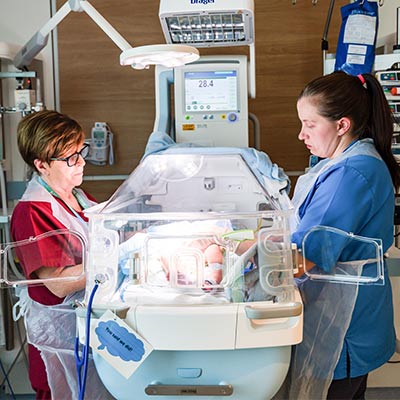
During the shift, Alexis contributed to multidisciplinary team (MDT) working to support the coordination of Freddie’s care. This included liaising with medical staff, radiology services and specialist paediatric neurology teams at a tertiary children’s hospital.
Under supervision, Alexis communicated relevant clinical information to medical staff and sought guidance to support ongoing care planning. She also supported communication with the radiology team, including progressing imaging requests, following up results from X-rays and contributing to the coordination of an MRI scan.
Alexis prioritised tasks and communication effectively throughout the shift, ensuring that relevant information was shared with the appropriate professionals in a timely manner.
Alexis had the opportunity to accompany Freddie to the MRI scan, which enabled her to maintain continuity of care, strengthen the therapeutic relationship and provide reassurance to both Freddie and his parents during a potentially distressing experience.
As the hospital was not a specialist paediatric centre, Alexis observed how information was shared with the regional paediatric neurology service to ensure specialist input into Freddie’s care. This included the use of digital systems to access, document and share clinical information safely and effectively between organisations.
Throughout the shift, Alexis engaged in reflective discussions with her practice supervisor. She received constructive feedback on her communication and clinical reasoning, and used this to identify areas for development and build confidence in her practice.
What this demonstrates
- Alexis demonstrated effective team working by contributing to communication and coordination of care across the multidisciplinary team (5.1)
- She showed developing leadership skills by prioritising tasks and taking an active role, under supervision, in liaising with medical and radiology teams to support decision-making (5.1)
- Alexis used clear and appropriate communication with colleagues to share information and support collaborative working (5.1)
- She used digital systems to document, access and share information to support safe and effective care across teams and organisations (5.11)
- Alexis recognised the importance of interagency working, including collaboration with specialist paediatric services, to support best practice and patient outcomes (5.1, 5.11)
- She maintained continuity of care by accompanying Freddie to investigations and providing reassurance to him and his family (5.1)
- Alexis engaged in reflection around her networking and responded to feedback from her practice supervisor, supporting her ongoing development and learning (5.8)
 Previous
You are here:
-
Read example scenario
-
Platform 1 : Acute care (children’s high dependency unit)
-
Platform 2: children’s high dependency unit
-
Platform 3 : Acute care (children’s high dependency unit)
-
Platform 5 : Acute care (children’s high dependency unit)
-
Platform 6 : Acute care (children’s high dependency unit)
-
Platform 7 : Acute care (children’s high dependency unit)
-
Annex A : Acute care (children’s high dependency unit)
-
Annex B : Acute care (children’s high dependency unit)
-
References and guidelines
-
Platform 1 : Acute care (children’s high dependency unit)

