



This scenario was developed by Alexis Gould, a final-year children’s nursing student, with support from Danielle Edge, Lecturer in Child Health Nursing at the University of Plymouth. It draws on experiences of learning within an acute high dependency care setting. Names and other identifying details have been changed to protect confidentiality.
Practice environment
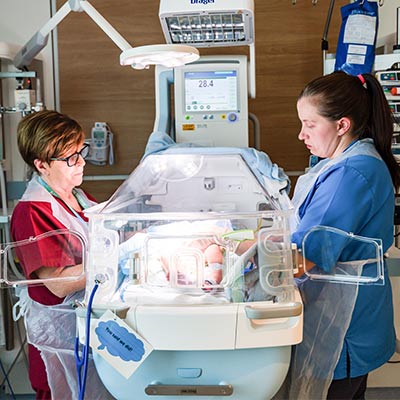
Rainbow Ward is a children’s high dependency unit (HDU) within a district general hospital, providing Level 1 and Level 2 paediatric critical care (PCC). The unit has four beds, including one side room.
Paediatric critical care is defined by the Paediatric Critical Care Society (PCCS) as care for children requiring an enhanced level of observation, monitoring or intervention that cannot be safely delivered in a general ward (PCCS, 2021). Levels of paediatric critical care were originally outlined in the Time to Move On report (RCPCH, 2014) and are reflected in current PCCS standards (2021).
Practice learning context
This scenario focuses on the learning experience of Alexis, a second-year child nursing student. While on placement in the Children’s Assessment Unit (CAU), Alexis arranged a spoke placement within the HDU to broaden her understanding of higher acuity care and multidisciplinary working.
During the spoke day, Alexis was supervised by Charlie, a registered nurse, children’s field (RNC) acting as practice supervisor. Additional support was available from another RNC and the clinical educator on the unit. Alexis’s practice assessor remained based in the CAU and supported her learning through reflective discussion at the end of the shift.
Alexis was allocated, alongside her practice supervisor, to care for a child requiring 1:1 nursing in a Level 2 PCC bed space.
Learning objectives
At the start of the shift, Alexis worked with her practice supervisor to agree the following learning objectives:
- To understand the rationale for high dependency care, including recognising normal and deteriorating neurological observations
- To safely administer medicines in line with local and national medicines management guidance
- To apply knowledge of anatomy and physiology to inform clinical reasoning and decision-making
- To work collaboratively with members of the multidisciplinary team (MDT) within a high dependency setting#
- To contribute to the planning of individualised care, including discharge planning and continuity of care
Children on the unit
Bed 1
Freddie is a 15-year-old young person admitted following a road traffic collision. He was admitted to the HDU the previous evening and requires ongoing neurological observation and close monitoring consistent with Level 2 PCC.
Bed 2
A 9-year-old girl Jane is awaiting admission following scoliosis surgery. She will require post-operative monitoring in the HDU, including management of a urinary catheter, monitoring of fluid output, vital signs, and pain management.
The following sections demonstrate how Alexis’s learning experience aligns with the NMC Standards of proficiency for registered nurses (2018).


