



Putting Proficiencies into Practice
Platform 1: Being an accountable professional
Proficiencies
1.8 demonstrate the knowledge, skills and ability to think critically when applying evidence and drawing on experience to make evidence-informed decisions in all situations
1.11 communicate effectively using a range of skills and strategies with colleagues and people at all stages of life and with a range of mental, physical, cognitive and behavioural health challenges
1.13 demonstrate the skills and abilities required to develop, manage and maintain appropriate relationships with people, their families, carers and colleagues
1.15 demonstrate the numeracy, literacy, digital and technological skills required to meet the needs of people in their care to ensure safe and effective nursing practice
1.16 demonstrate the ability to keep complete, clear, accurate and timely records
What Alexis did
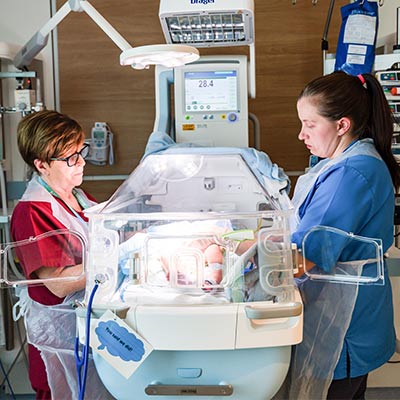
Alexis introduced herself to Freddie and his mother, who was present at the bedside. She explained her role as a student nurse and outlined that she would be undertaking bedside safety checks1, including confirming Freddie’s identity using his wristband.
After gaining consent, Alexis involved Freddie in the process by asking him to confirm his details, ensuring he was included in his care. She explained each step of the safety checks clearly and in an age-appropriate way, ensuring privacy and dignity were maintained throughout.
- bedside safety checks are the routine checks made at or around a person’s bedside to identify immediate risks and make sure the environment, equipment and care arrangements are safe.
As part of her assessment, Alexis completed a structured A-E (Airway, Breathing, Circulation, Disability, Exposure) assessment. She discussed her findings with her practice supervisor, demonstrating developing clinical reasoning, particularly in relation to neurological observations and the need for ongoing monitoring in a high dependency setting.
Alexis then completed the safety check documentation, recording her name and student designation. She reviewed this with her practice supervisor to ensure accuracy and completeness.
Throughout the shift, Alexis maintained clear and accurate documentation, including:
- Nursing notes, incorporating relevant communication with the multidisciplinary team (MDT) and Freddie’s family
- A detailed end-of-shift handover reflecting care delivered and ongoing needs
- A structured A–E assessment recorded in the nursing notes
- Timely recording of observations and safety checks using the trust’s digital system, following appropriate training
What this demonstrates
- Alexis demonstrated the ability to develop therapeutic relationships by introducing herself clearly, explaining her role, and involving both Freddie and his mother in care delivery (1.13)
- She used a range of communication strategies to support understanding and engagement, adapting her approach to meet Freddie’s needs as a young person (1.11)
- Alexis ensured privacy and dignity were maintained during care delivery, supporting person-centred practice (1.13)
Alexis demonstrated effective communication with colleagues, including discussing findings from her A-E assessment and contributing to handover (1.11) - She applied developing clinical knowledge to undertake and interpret an A-E assessment, discussing findings with her practice supervisor to support safe, evidence-informed care (1.8)
- Alexis demonstrated effective use of digital systems and documentation processes to support safe care delivery (1.15)
- She maintained clear, accurate and timely records across multiple aspects of care, including assessments, observations and handover (1.16)
- Alexis worked within her level of competence by checking documentation and clinical findings with her practice supervisor, supporting safe and accountable practice (1.8, 1.13, 1.16)
 Previous
You are here:
-
Read example scenario
-
Platform 1 : Acute care (children’s high dependency unit)
-
Platform 2: children’s high dependency unit
-
Platform 3 : Acute care (children’s high dependency unit)
-
Platform 5 : Acute care (children’s high dependency unit)
-
Platform 6 : Acute care (children’s high dependency unit)
-
Platform 7 : Acute care (children’s high dependency unit)
-
Annex A : Acute care (children’s high dependency unit)
-
Annex B : Acute care (children’s high dependency unit)
-
References and guidelines
-
Platform 1 : Acute care (children’s high dependency unit)

