



Practice learning review consultation
This consultation closed on Thursday 23 July 2026 and we are no longer accepting responses. We will now analyse the findings and provide further updates in due course.
Since January 2024, we have been reviewing practice learning for nurse, midwife and nursing associate students so that our requirements continue to enable students to gain the knowledge, skills and adopt the behaviours they need, in safe, inclusive practice learning environments. This consultation – which was approved by our governing Council in November 2025 – forms a key part of our review.
Our proposed changes are based on engagement with our partners and stakeholders about what they want to see in the updated education and training standards.
It follows research and engagement throughout 2024 and 2025 with students, professionals, approved education institutions (AEIs), practice learning partners (PLP), the public and stakeholders.
This research found that while many students benefit from positive placements, the quality of experiences can vary.
In 2025, alone, we held 25 engagement events, including roundtables and webinars, which were attended by 1,250 people from across the UK, including students and professionals working in practice and higher education.
The proposed changes are influenced by issues emerging in the practice learning landscape, such as the mixed experience of nursing students on practice learning placements and the concerns raised by some student midwives about gaining the confidence and competency they need for practice.
And they include the thought-provoking proposals – based on feedback from our stakeholders – to reduce the number of learning hours in nursing programmes, and to extend the length of midwifery programmes.
Based on feedback, we’re proposing profound changes to our standards. We recognise that there will be a wide spectrum of opinion on these proposals – we are launching the formal consultation to ensure these opinions are fully analysed to inform any final proposed changes.
More detail is available in this practice learning review consultation document (Ymgynghoriad Adolygu Dysgu Ymarferol). We highly recommend reading this before responding to the consultation.
You can respond to the survey here
Nursing and midwifery programmes are delivered through a combination of theory learning (50%) and practice learning (50%). Practice learning gives students the opportunity to demonstrate their skills, knowledge and behaviours in real life health and care settings, putting them in direct contact with people who use services.
Nursing, nursing associate and midwifery students must undertake practice learning placements across different health and care settings. These placements provide them with opportunities to develop the confidence and ability to think critically, apply their knowledge and skills in real-life settings, and provide evidence-based care while under supervision.
Our standards for education and training set out how pre-registration nursing and midwifery programmes should be delivered – ensuring that future professionals achieve the standards of proficiency they need to deliver safe, effective care for people when they join the Register.
When the UK left the EU, we gained the flexibility to set the standards for pre-registration nursing and midwifery programmes. In January 2024 we launched a review of practice learning requirements so that we can understand how best to support student learning across the UK.
Since launching the review, we’ve carried out months of extensive research and engagement with students, educators, professionals, practice learning partners, and the public across the UK. We found that while many students benefit from positive placements, the quality of experiences can vary.
We also found that wider factors beyond our remit – such as practice learning capacity, cost of living, and resource or workload pressures – can affect students’ practice learning experiences.
Our consultation includes the thought-provoking proposals – based on feedback from our stakeholders – to reduce the number of learning hours in nursing programmes, and to extend the length of midwifery programmes.
For nursing programmes, the proposal is to reduce the minimum number of programme hours from 4,600 to 3,600 – to place a greater emphasis on the quality of practice learning experiences rather than the achievement of a set number of practice learning hours.
Globally, there is significant variation in the number of learning hours required to become a registered nurse. The current requirement of 4,600 hours stems back to EU legislation which no longer applies to the UK.
Outside of the EU, there is significant variation in the number of nursing programme hours and within this, the number of practice hours. They are generally lower than the hours mandated by the EU directive – 4,600 in total, of which 2,300 are practice learning.
For example in the USA, students are required to complete around 700 hours of practice learning, 800 hours in Australia and 1,100 hours in New Zealand.
Reducing the minimum requirement for practice learning hours would give approved education institutions (AEIs) the opportunity to design more innovative and creative programmes – with a lower minimum to meet, the emphasis could shift more clearly towards the quality of learning rather than the quantity of hours.
The midwifery proposal is to extend programmes from three to four years – against the backdrop of high-profile inquiries into maternity care across the four nations of the UK, which have investigated concerns about the safety, quality and culture of maternity and neonatal services.
There is also growing evidence that maternity outcomes and experiences vary greatly for women and mothers. Figures released by MBRRACE-UK show that Black women are three times more likely, and Asian women are 1.3 times more likely, to die during pregnancy or postnatally than White women. The figures also show that Black babies are over twice as likely to be stillborn as White babies – with Asian babies 50% more likely to be stillborn.
Since introducing our Standards for pre-registration midwifery programmes in 2019, we have heard feedback about the challenges students can face in meeting all requirements within a three-year programme.
This includes concerns about whether students have sufficient time to gain exposure to a wide range of practice scenarios – including caring for women and mothers from diverse backgrounds.
Our engagement with stakeholders has highlighted that, for many students, the current length of midwifery programmes results in task-oriented learning – rather than enabling students to have quality practice learning placements which prioritise holistic care for a diverse range of women, newborn infants and their families.
Extending midwifery programmes would therefore allow more time for students to achieve the proficiencies set out in our standards.
Other areas for consultation include:
- Strengthening anti-racism, bias awareness and cultural curiosity, safety and respect in nursing and midwifery education and training
- If pre-registration nursing programme hours are reduced, requiring pre-registration nursing associate programmes to be a minimum of 2,300 hours – not 50% of the nursing programme hours as set out in the current standard, and
- Ensuring that all nursing students have at least one community practice learning experience in health or social care.
In February 2025, we announced a programme of work which includes the modernisation of the Code and the revalidation process, progressing our practice learning review and re-sequencing our review of advanced practice.
Delivering this regulatory work will ensure that our standards will reflect the significant changes that have impacted the delivery of health and care in recent years from EDI to the Covid-19 pandemic, high profile inquiries and the progress of artificial intelligence.
This programme will support the professionals on our Register to continue delivering safe and effective care in this changing context.
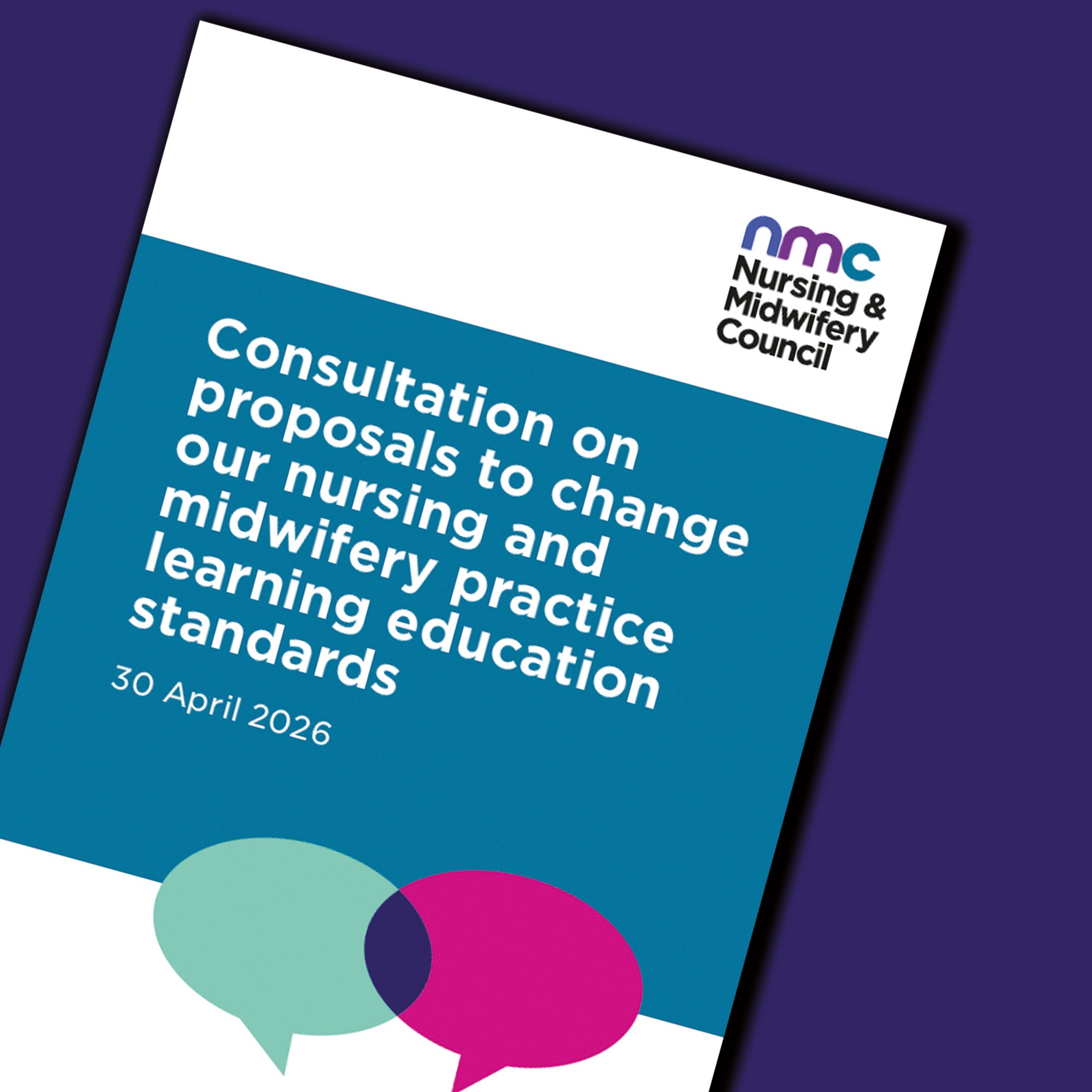
Consultation to strengthen nursing and midwifery practice learning
This document sets out all the areas we are consulting on within the nursing and midwifery education standards. It includes information on why we are reviewing practice learning, our research and stakeholder engagement, and our areas for consultation.
Read moreFrequently asked questions
Commonly asked questions about the review and consultation.
Ymgynghoriad i gryfhau dysgu ymarfer nyrsio a bydwreigiaeth
Mae’r ddogfen hon yn amlinellu’r holl feysydd rydym yn ymgynghori arnynt o fewn y safonau addysg nyrsio a bydwreigiaeth. Mae’n cynnwys gwybodaeth ynghylch pam rydym yn adolygu dysgu ymarfer, ein hymchwil ac ymgysylltu â rhanddeiliaid, a’n meysydd ar gyfer ymgynghori.
Practice learning consultation - easy read
Easy reads are designed for people with learning disabilities but can be helpful for others who find reading difficult. It is a format that uses pictures and simple words to make information easier to read.
Ymgynghoriad darllen hawdd
Mae darlleniadau hawdd wedi’u cynllunio i bobl ag anableddau dysgu ond gallant fod o gymorth i eraill sy’n canfod darllen yn anodd. Mae’n fformat sy’n defnyddio lluniau a geiriau syml i wneud gwybodaeth yn haws ei darllen.
Equality Impact Assessment
The Equality Impact Assessment (EQIA) considers the potential equality impacts of our Review of Nursing and Midwifery Practice Learning (RPL) and the proposed changes to education programme standards for nursing and midwifery programmes.
Asesiad Effaith Cydraddoldeb
Mae’r Asesiad Effaith Cydraddoldeb (EQIA) yn ystyried effeithiau cydraddoldeb posibl ein hadolygiad dysgu ymarfer a’r newidiadau arfaethedig i safonau rhaglen addysg i raglenni nyrsio a bydwreigiaeth.
Welsh Language impact assessment
The practice learning review affects all countries within the UK – this impact assessment looks at whether there will be an impact on Wales and the Welsh language.
Asesiad Effaith ar yr Iaith Gymraeg
Mae’r adolygiad dysgu ymarfer yn effeithio ar yr holl wledydd o fewn y DU – mae’r asesiad effaith hwn yn edrych ar a fydd effaith ar Gymru a’r iaith Gymraeg.

